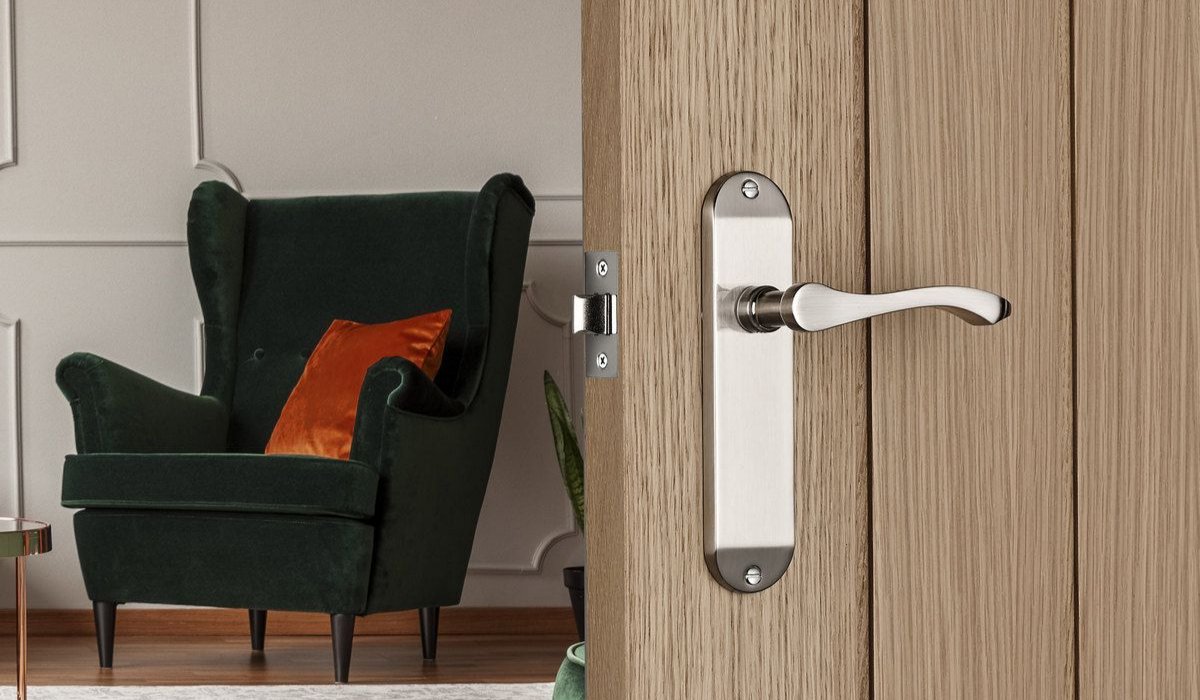
PREPARING TO INSTALL YOUR NEW DOOR HANDLE Before you set to fit a door handle, there are several factors beyond the style or finish to consider: LOCATION Where you will fit your new door handle is an essential factor to consider when planning your door handle installation. Your doors throughout the home vary in the level of security they need. For instance, your interior door handles do not need to be as secure as your exterior handles. In addition, internal door handles do not need to withstand the elements like your external handles. However, they still need to be secure, offering protection to your home and your belongings. Your external door handles will need to be durable to endure the elements. They will also need to be secure and comply with any industry standards to prevent unwanted access to your home. LOCKS & LATCHES Doors throughout your home will require a lockable function, so it is crucial to consider the location of your door handle here too. EXTERIOR DOORS Your exterior door handles will most likely require a robust mortice lock and potentially additional fixtures such as a nightlatch. INTERIOR DOORS Alternatively, your internal door may only require a latch to keep the door closed but not locked. Latches are vital for keeping doors closed. They achieve this by sitting inside the door’s edge for a flush fit and keeping the door shut by connecting the latch bolt into a complimentary strike plate set within the door frame. A latch will stop the door from opening on its own, ensuring that you can still open the door using the door handle or doorknob. BATHROOM DOORS Except for your bathroom, most internal doors will require a latch. Your bathroom will require a specific bathroom lock, paired with a thumbturn and release lock to keep your bathroom private when in use. Simple fixings, like thumbturns, are an excellent method of adding privacy whilst still being easy to use. In addition, they offer a much safer option for families, as they prevent young children from getting locked in the bathroom. BACKPLATE SIZE If you are looking to replace a door handle instead of fitting a new one from scratch, it is essential to get the measurements of the backplate size for your current handle. This measurement is to ensure that your new handle will cover any marks or scratches from view. MULTIPLE DOOR HANDLES Unless you are simply replacing a single door handle, you may fit multiple handles throughout your home. In this case, door handle packs will save you precious time and effort in hunting for matching door accessories. Door handle packs include complimentary accessories, such as hinges and a latch to accelerate installation. Not only can door handle packs save you time and effort, but they provide an economical alternative to buying multiple handles. They save time, money, and effort because you receive everything you need in one purchase. Our Contour Lever on Rose Door Handle Pack is seen below in a stylish Brushed Nickel finish. The Contour Lever on Rose Door Handle provides the ideal finishing touch for your internal doors, adding a discreet, minimalistic style to your home. ACCESSIBILITY Ensuring the rooms within your house are straightforward to use is vital when wanting your home to be family-friendly. Accessibility needs to be a particular consideration for homes with young and older members who may struggle to grip specific handle designs. In this case, opting for easy-to-grip designs and lighter builds will make interior doors accessible for every family member. MARKING THE PLACEMENT OF YOUR DOOR HANDLE & LATCH Once you have chosen the right door handles for your home, it is time to prepare to place your handle on the door. Figuring out where on the door to correctly position your door handle is vital. The most common height for a door handle is 1 metre or 100cm above the floor. However, following standard UK regulations, all door handles must sit between 90cm and 105cm from the floor. Follow our quick guide to figure out the ideal position for your new door handles. INSTALLING YOUR NEW DOOR HANDLES Now that you have your new handles and the necessary measurements, you are ready to learn how to fit a door handle. Please note, the following instructions are for fitting a door handle to a brand-new door. Please read our previous article for replacing an existing door handle: Replacing Old Door Handles – A Detailed How-To Guide. The following instructions outline how to fit a door handle with a tubular latch. WHAT YOU WILL NEED: INSTALLATION INSTRUCTIONS: STEP 1: COVER THE AREA AROUND THE DOOR WITH DUST SHEETS. STEP 2: WEDGE THE DOOR OPEN FROM EITHER SIDE WITH A DOOR WEDGE. STEP 3: USE A 2MM DRILL BIT TO DRILL PILOT HOLES IN THE DOOR’S FRONT, BACK, AND NARROW PORTIONS. STEP 4: CREATE A CIRCULAR HOLE, OR SPINDLE HOLE, IN THE OUTER EDGES OF THE DOOR USING A 25MM SPADE DRILL BIT. STEP 5: APPLY A SMALL PIECE OF BRIGHTLY COLOURED MASKING TAPE AROUND THE DRILL BIT. STEP 6: NEXT, USE THE 25MM DRILL BIT TO DRILL A HOLE INTO THE DOOR EDGE. STEP 7: TRACE AROUND THE LATCH’S FACEPLATE ON THE EDGE OF THE DOOR WITH A PENCIL. STEP 8: CARVE OUT THE FACEPLATE OUTLINE USING A CHISEL AND HAMMER. STEP 9: SCREW THE FACEPLATE INTO THE DOOR’S EDGE. STEP 10: PLACE THE SPINDLE THROUGH THE CORRESPONDING HOLE IN THE DOOR. STEP 11: DRILL INTO THE PREVIOUSLY DRILLED PILOT HOLES TO SECURE THE HANDLES TO THE DOOR. STEP 12: FASTEN THE STRIKE PLATE INTO THE DOOR JAMB. STEP 13: CHECK YOUR WORK.

Category: Uncategorized
HOW TO MEASURE A TUBULAR LATCH
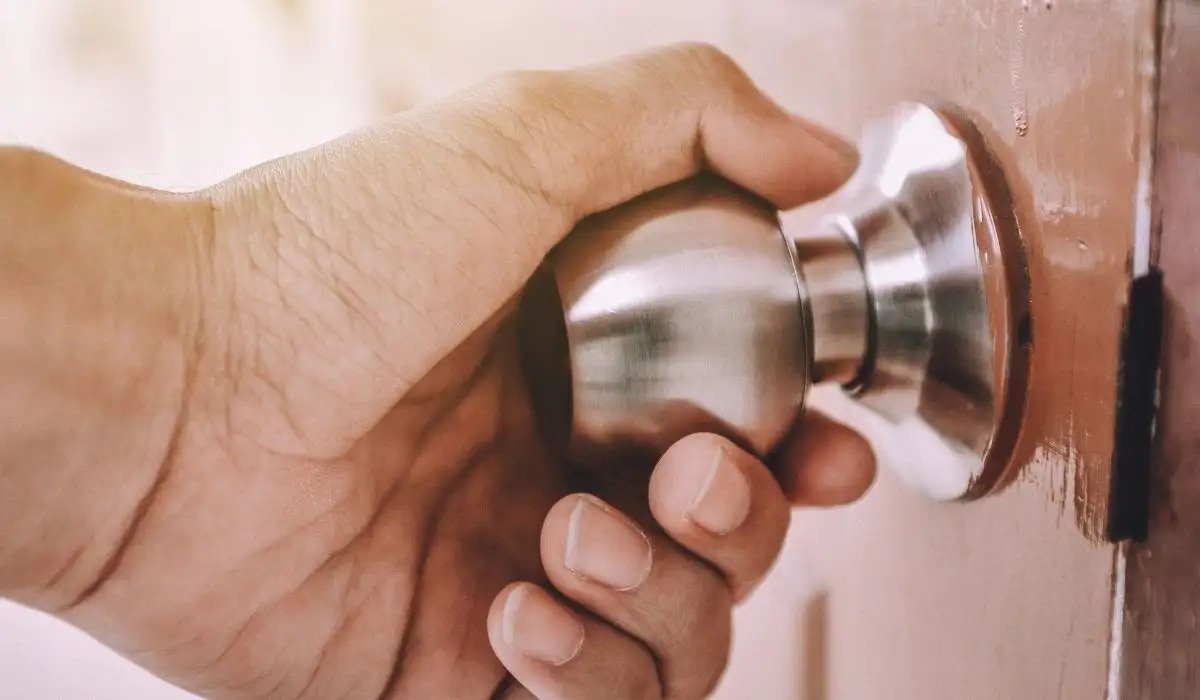
In truth, it’s one of the most crucial parts of hardware for your door, so it is essential to understand what’s what. So, without further ado, let’s take a closer look at what’s involved. WHAT EXACTLY IS A TUBULAR DOOR LATCH? Without wanting to get too simplistic, a door latch itself helps a door be closed and then be held tightly shut. There are several door latches available on the market, including the Upright (Flat) Latch, the Night Latch, and the tubular latch. While there may be many types of door latch to choose from, by far and away, the most common you’ll find installed in your average door frame is the tubular door latch. TUBULAR DOOR LATCH FEATURES Look around at the internal doors in your vicinity, and the chances are that you’ll see a tubular product sitting in place. Closely examine a latch of this kind, and you’ll usually find a steel, rectangular tube, which can contain a couple of different latch mechanisms. The most straightforward type you’ll encounter will be a ‘tongue’ (latch bolt) with a spring-loaded ‘follower’ that retracts to open the door in question, and then the door is closed. AN EASY-TO-FIT TUBULAR STEEL CASING The straightforward design of tubular latches makes them particularly easy to fit, often requiring just a single drilled spindle hole to install. This means that you get to avoid complicated chisel or jig work – something that’s required for more complex mortice latch styles. It’s this simplicity that makes tubular latches popular with tradespeople and home improvement enthusiasts, especially as they’re available in a wide range of door latch sizes and shapes. A VARIETY OF LATCH OPTIONS ARE AVAILABLE. The latch is an often forgotten aspect of door function, but a critical one nonetheless, as it has a significant bearing on how smoothly a door handle operates. Also, in addition to the size and style options you get when considering a tubular latch, you have to decide what level of product quality you’re aiming for, with the standard, economy, heavy sprung, and double sprung tubular latch options available. HOW TO MEASURE A TUBULAR LATCH Now we get to the part that made you read our article – how to measure for a tubular latch. And the first thing you need to consider is what type of door handles you’re going to go for, as it has a bearing on how to proceed. Should you opt for a popular product like lever door handles, then likely the best choice is a 76 mm tubular latch – irrespective of whether they fall into the ‘lever-on-rose’ or lever-on-backplate’ category. As experts, we recommend a 64mm latch for backplate handles and 75mm for rose door handles and doorknobs. MEASURING THE BACKSET Another essential aspect to consider is the backset measurement or the distance between the door’s edge and the latch’s spindle mechanism. Typically, a 76 mm case will feature a 65 mm backset, with a 63 mm case measurement having a 44 mm backset. Getting the backset measurement wrong can lead to sore knuckles, as they can end up knocking against the architrave. The type of handle used will also have to be taken into account, as you may need to offset it slightly if you were to, say, pick a lever handle. COMMON MISCONCEPTIONS DISPELLED Many professional tradespeople choose the smallest latch sizes (64 mm) when installing new doorknob mechanisms, but the aesthetic effect is always better when selecting the longer 76 mm option. Doing so offers a backset size of 56 mm, which has the nice side-benefit of positioning the installed door knobs or lever handles right in the middle of the stile. The only time this wouldn’t be the case is when the existing door is narrow or features glass panels. CASE DEPTHS & BACKSET SIZE Another common mistake that people make is that the case depth and backset size are the same. In truth, the case depth is referred to as the lock size, and while not all locks follow the same template, 90% of the time, they do. That means that other measurements can be assumed based on the case depth. There are many different case depths, but the most common is 64 mm and 76 mm (equivalent to 2.5″ and 3″ imperial). On the other hand, the backset measurement is the distance from the lock’s leading edge to the centre of the keyhole. This is such an important thing to remember when replacing locks because it helps you avoid drilling new holes. The most common sizes of backset you get are 44 mm (on a 64 mm lock case) and 56 mm (on a 76 mm lock case). A CRITICAL, QUICK DOOR FRAME MEASUREMENT To avoid having problems when installing your mortice latch, you should take a quick measurement so that you’re 100% sure about the right size to use. This is done by measuring the door stile width and dividing that figure by two. This is a crucial part of the process, as this determines the precise backset required to ensure that the doorknobs used are located precisely where they need to be – in the centre of the stile. WHAT IF A DIFFERENT DOOR HANDLES CHOICE IS MADE, LIKE A DOORKNOB? So, we’ve covered the fact that 76 mm latch size is ideal for lever handles, but does that apply when different door handle options are chosen? Like doorknobs, for example? The fact is, the door furniture used does matter, and there’s a surprising misconception in circulation, even with professionals! 76 MM LATCHES ARE NOT UNIVERSALLY ACCEPTABLE Even in the trade, some view 76 mm latch as universally acceptable, regardless of the door furniture chosen. However, that’s wide of the mark, as 76 mm is the very minimum-sized latch that you can use in conjunction with sprung and unsprung doorknobs. IDEALLY, USE A 102 MM LATCH FOR DOORKNOBS. In reality, 76 mm latches can be too short for some door handle types. When this happens,… Continue reading HOW TO MEASURE A TUBULAR LATCH
WHAT IS A 5 LEVER MORTICE LOCK?
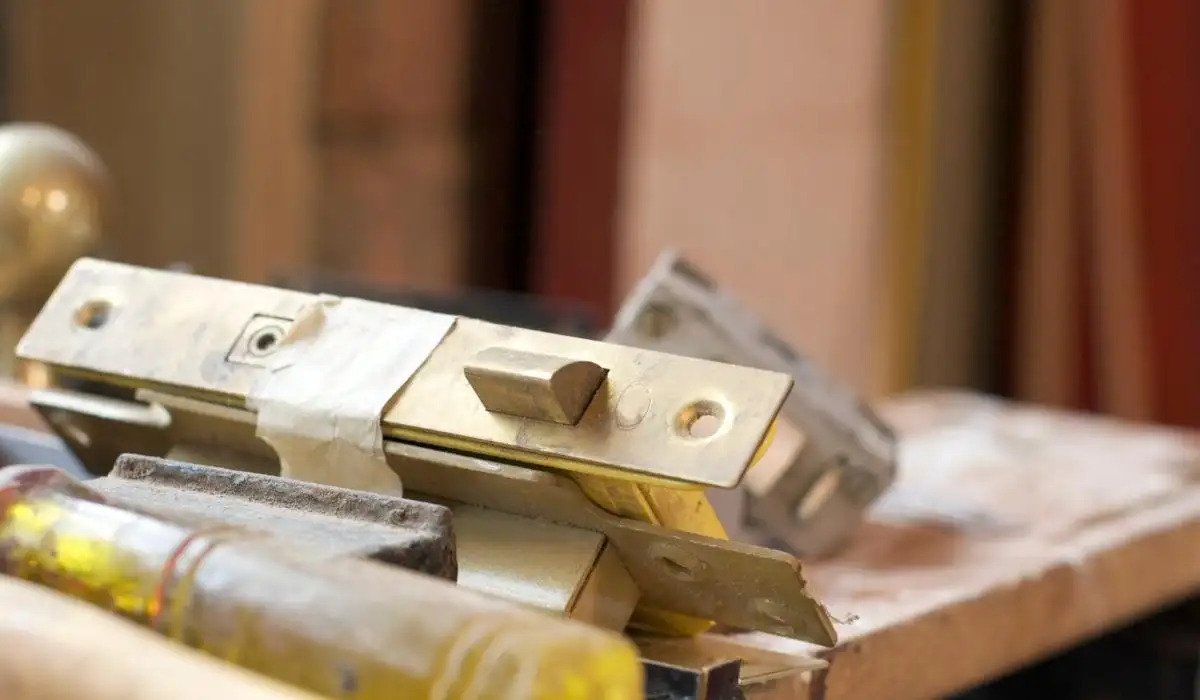
When trying to tell a 5 lever mortice lock from another, there are often some identifying markers you can look for, such as: OTHER TYPES OF FRONT DOOR LOCK YOU COULD HAVE If you’re not sure what type of front door lock you have, here’s a description of some of the others you might have. THE MULTI POINT LOCKING SYSTEM Used in both wooden and uPVC doors, the multi point locking system is distinguishable by the fact that it has three locking points; one by the lock, one on the top, and one at the bottom. As with the mortice locking mechanism, you need a key to unlock it from either side. THE RIM AUTOMATIC DEADLATCH Also known as the night latch, this will usually be mounted on the surface of the door, with the lock’s cylinder connected to the door’s keyhole outside. It is installed in isolation as it doesn’t need to be paired. However, it’s a relatively insecure option, as it’s not concealed within the door frame. Another big indicator that you have a rim automatic deadlatch would be that your door is made of wood, as a lever mortice deadlock and deadlatch combo can’t be fitted to composite doors or any other type of door material. THE EURO CYLINDER The design of a euro cylinder is very different from a mortice lock, as it features a central revolving ‘cam’. With a euro lock fitted, the key is inserted and turned, moving the cam to lock or unlock the door, depending on which way it’s moved. The euro-lock is fitted in combination with a euro mortice door lock, with the moving cam then turning the deadlock bolt inside or outside accordingly. With a Euro lock fitted, the key is inserted and turned, moving the cam to lock or unlock the door depending on which way it’s moved. THE ELECTRONIC DOOR LOCK If you’re one of the growing numbers of people who have what can be described as a ‘smart home’, there’s a chance that you might have electronic door locks as the primary security for your property. Operated by keypad or smartphone, they remove the need to have any kind of physical, but they’re not quite as secure as they seem. The drawback here is that like anything that’s internet-connected, they’re vulnerable to hacking (just like your email password login), making them much less secure than a mortice lock. WHAT DOES BS3621 MEAN? This is quite an important aspect to consider when talking about door locks, as this approval marking means that the lock in question meets British Standards Institution (BSI) criteria, having been officially tested to withstand drilling and lock picking. If you do have a BS3621 approved door lock, there’s a good chance that it will display the appropriate kite mark stamped on the faceplate. However, an indication that you don’t have a BS-approved mortice lock would be if it has a night latch – something that’s often added for extra security. HOW DO THEY DIFFER FROM 3 LEVER MORTICE LOCKS? The obvious answer to the question is clearly that a five lever mortice deadlock has two extra levers, but it’s the security ramifications of this that really matter. Usually used on external doors, it’s not able to be opened from outside without a key when locked. Their secure nature is the reason why insurance companies specify them for external entrance doors. 3 LEVER MORTICE LOCKS ARE NOT AS SECURE You’ll usually find 3 lever mortice locks used where security is less of an issue e.g. on internal doors that connect together two already areas like your house and your garage. Insurance companies also don’t require that you use insurance-rate locks internally, which is a three lever mortice will suffice. Because of the fact that the 3 lever mortice lock has 2 fewer levers, means that it’s less secure. The prospect of key duplication increases – hence the reason why you won’t find a BS3621 approved three-lever product. HOW DO THEY DIFFER FROM SASH LOCKS? You’ll also often find sash locks fitted to external wooden doors, which can also be described as mortice locks. However, they differ in one fundamental way. While a 5 lever mortice lock won’t have a latch to open and close the door, a sashlock will, but as mentioned, the latch makes the lock less secure. OTHER BENEFITS ASSOCIATED WITH 5 LEVER MORTICE LOCKS If you have a 5 lever mortice lock in your wooden door that has the British standard kitemark, then you get a range of advantages, which include: HOW MUCH DOES A 5 LEVER MORTICE DEADLOCK NORMALLY COST? Well, the actual dead locks themselves are surprisingly inexpensive, with a good quality brand costing less than £10 in most cases. In fact, by far the biggest part of the price is the installation itself, which can be as high as £100-£200. However, it’s important to determine whether the locksmith you use also charges a call-out fee on top of that, as this is sometimes not included. However, if you’re able to fit it yourself, the price of getting mortice deadlocks (complete with hard plates and keys) for wooden door types is very reasonable indeed. SO, WHAT’S THE BEST LOCK TO HAVE FITTED TO YOUR FRONT DOOR? There’s a reason why BS-approved mortice deadlocks are preferred by insurance companies and that’s because they’re essentially the safest kind of lock to have because of the added security they offer. They offer many benefits, but the fact that they’re harder for burglars to get past makes them the lock of choice for homes and businesses across the UK. Sure, this only applies to wooden doors and different non-wooden door types will require a compatible option, but if you do have a timber door, they should be your number one choice.